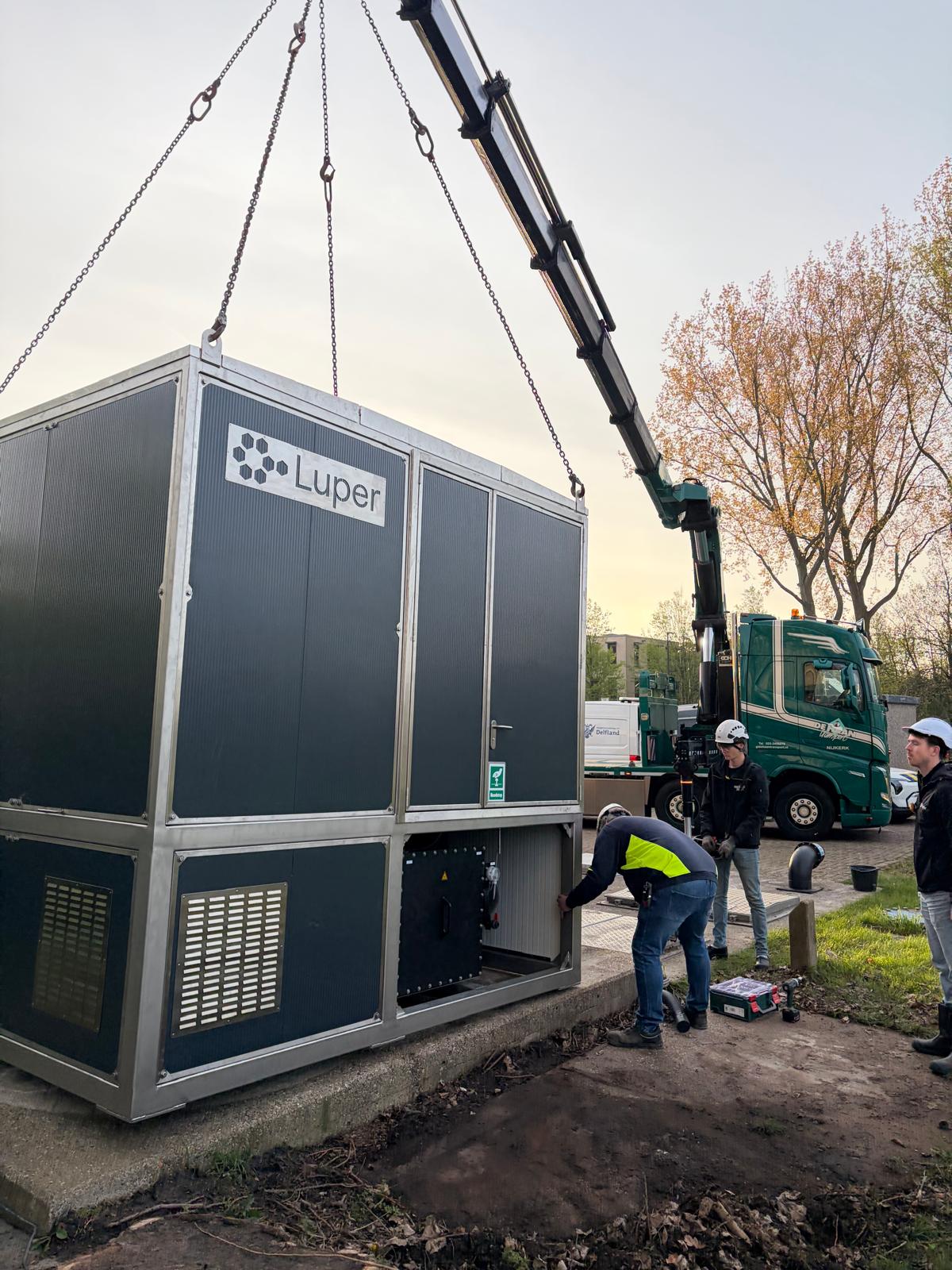
AirShield One

A plug-and-play air cleaning system for odors, VOCs and sulfur-containing gases
Electrically powered air cleaning provides year-round reliable odor control
Protects against emission spikes
Adapts cleaning power to real-time odor load
Plug-and-play
A compact system that only requires a power connection
Treats gas mixtures
Breaks down H2S, VOCs, sulfides, amines and other odors
Kills pathogens
Inactivates bacteria, viruses and fungi in the airflow
Reliable performance
Maintains removal during temperature, humidity and concentrations swings at wastewater facilities
Annual maintenance
Requires maintenance only once a year
Year-round odor control for sites facing odors, VOCs, H₂S, and pathogens.
Protects against emission spikes
Adapts cleaning power to real-time odor load
Plug-and-play
A compact system that only requires a power connection
Kills pathogens
Inactivates bacteria, viruses and fungi in the airflow
Specifications
Dimensions (LxWxH)
3200 x 2300 x 3100 mm
Nominal flow rate
300 - 1.000 m3/h
Parallel placement
Multiple units
Suitable gases (selection)
HS, VOCs, sulfides, amines
Concentrations (peak)
0 - 750 ppm
Interested in our AirShield One?
Get in touch
Customer spotlight
“I experienced the collaboration with Luper as very pleasant. Communication was clear, and the results were presented transparently.

In addition, Luper actively contributed ideas regarding the outcomes and the possibilities of their technology.”
Sanna Melita
Process Technologist, Hoogheemraadschap van Delfland
FAQ
Which pollutants does the AirShield remove (H₂S, DMS, VOCs)?
Chevron arrow down
The AirShield is designed to treat toxic and odorous gases at wastewater treatment plants and other industrial facilities. Target gases include sulfur-containing compounds such as H₂S and dimethyl sulfide (DMS), amines, aldehydes, terpenes, aromatics and other odors and (very) volatile organic compounds (VOCs).

A stand-alone unit can effectively treat peak concentrations of up to several hundreds parts per million (e.g. 750 ppm for H₂S). We offer site assessments to confirm that the AirShield is suitable for your specific airflow.
What removal efficiency and outlet concentrations can I expect?
Chevron arrow down
The AirShield will be configured to suit your site-specific requirements, such as the maximum residual emission and/or required removal rate. In field operations at wastewater treatment plants and pumping stations the AirShield shows removal rates of >99% with residual odor concentration of <75 ouₑ/m³.

We offer assessments to determine the expected performance on your airflow
How is the AirShield’s performance verified?
Chevron arrow down
The AirShield has built-in sensor slots for (remote) output and status monitoring. We provide data-enabled services such as emission monitoring and reporting, performance optimization and predictive maintenance.

If desired, we offer onsite pilots and demonstrations to validate performance under real operating conditions.
How does the AirShield clean exhaust air?
Chevron arrow down
The AirShield cleans air based on our patent pending gas-phase advanced oxidation process (GPAO). The goal of our GPAO process is to neutralize toxic and odorous gases, turn these neutralized gases into particles and then remove the particles from the air.

This sequence is completed because particles are easier (and thus more cost effective) to treat than gases.
What is the total cost of ownership (TCO) of the AirShield?
Chevron arrow down
The TCO depends primarily on treated airflow (m³/h), pollutant load and variability (e.g., H₂S/DMS peaks), operating hours, and the required outlet target. Operating expenses are typically made up of electricity consumption (Wh/m³), planned maintenance and service, and consumables such as filters and sensors.

During a site assessment we provide a TCO estimate for your location, including typical and peak energy use, expected maintenance intervals, and consumables, so you can compare CAPEX and OPEX against alternatives such as activated carbon, biofilters, or scrubbers.
How much electricity does the AirShield use?
Chevron arrow down
Electricity use depends on airflow rate, inlet concentration, temperature and humidity. Typical ranges are 0.5 – 1.5 Wh/m³ for low concentration airflows at up to 5 Wh/m³ for high concentration airflows (incl. fan).

The AirShield minimizes energy consumption by matching operating power to pollutant concentration based on sensor feedback. Using the specifics of your airflow we provide typical and peak energy consumption estimates.
Does the AirShield require (storage of) chemicals?
Chevron arrow down
No, the AirShield uses electricity and the water and oxygen naturally present in the air to generate reactive species in-situ for oxidation. Any residual reactive species are converted downstream using an integrated catalyst.
What maintenance is required and does it require special staff training?
Chevron arrow down
The yearly maintenance is designed to be straightforward and can be performed by a trained operator, a local service partner, or our team, depending on your preferences.

Tasks include inspection, checking sensors, and scheduled replacement of consumable components. We can provide service agreements and planned maintenance to ensure reliable performance. If desired the AirShield can be equipped with sensors for predictive maintenance.